A PHF Science Webinar: 9 October EST / 10 October NZT
Activity Levels in Forensic Science

The New Zealand Institute for Public Health and Forensic Science (PHF Science - formerly ESR) presents a webinar exploring the latest approaches, challenges and best practices for evaluating activity levels in forensic science, with a focus on the United States. Whether you’re a forensic practitioner, legal professional, or researcher, you’ll gain valuable insights from real-world case studies, expert commentary and discussion. Stay ahead of the curve on evolving standards and solutions for one of the most critical topics in today’s forensic landscape.
Agenda
Agenda
EST times are on 9 October / NZT times are on 10 October
12:30-13:00 EST / 05:30-6:30 NZT: Responding to questions on activity level propositions at court
Activity level questions most often arise in court either led by the prosecution but more often introduced by the defense or called in rebuttal. Current advice is to warn the court that the subsource LR cannot translate to activity level and then largely not to give any advice beyond the valid “Discussing whether something is possible does not help me convey the significance of the results in the context of this case” (NIST Human Factors Group).
We are not aware of these sentences being trialled in court yet but we suspect that they will not be the end of the discussion and that the witness will be asked a series of increasingly pointed questions. Equally a defense scientist may not recognise any limits on what should be said or even the form in which it is said.
We have been developing concepts around look up table that give generic results for certain situations. A number of these from us and others do exist. For example DNA under the fingernails of a deceased is strong evidence for Hp unless a viable alternative route exists. The absence of this evidence supports Ha.
We have also extracted a number of statements from the literature that are rigorous, traceable to the data, and transparent in that the data is published. These statements may be helpful in a general sense to the court. Examples include: the major donor on a screwdriver is usually but not always the last person to handle it, the minor is usually but not always not the last person to handle it.
We seek to place these tables and statements in the public domain and initiate refinement, improvement, and trials.
Speaker: Dr John Buckleton, Principal Scientist, New Zealand Institute for Public Health and Forensic Science
13:00-13:30 EST / 06:00-06:30 NZT: Implementing ALR in Texas criminal courts: Can we? Should We?
In the blockbuster science fiction movie, Jurassic Park, Dr. Ian Malcolm comments to InGen CEO John Hammond that, “Your scientists were so preoccupied with whether or not they could, they didn't stop to think if they should.” The statement was in the context of bringing dinosaurs back from extinction, but a similar question could be asked in the context of activity level assessments specifically within the United States criminal justice system. The purpose of this presentation is to ponder whether the activity level assessments contemplated by currently published international guidance is possible, realistic or advisable in the United States, where the vast majority of criminal trials are in state court.
Using a 2024 Texas murder trial as an example, the presentation will explore how questions regarding transfer, persistence, prevalence and recovery (TPPR) typically arise in criminal trials, and the difficult positions faced by most DNA analysts, whose training is focused on testing and interpretation at the sub-source level.
The discussion will highlight the need for robust, transparent and traceable analyses as articulated in published literature. Is this work possible in the United States given current resources? Why or why not? If not, how should analysts respond to the questions that inevitably arise? What are the benefits and drawbacks of a refusal response? When are they appropriate, or how could they be misleading? If a refusal response is problematic, what else can or should be said? Do we agree in the United States that scientists are better equipped to respond to TPPR questions? Or is it the role of the jury to discern how or when the DNA was likely deposited given the entirety of the evidence presented?
The presentation will also describe efforts currently underway in Texas to assist testifying DNA analysts in responding to TPPR questions.
Speaker: Lynn Garcia, General Counsel, Texas Forensic Science Commission
13:30-14:00 EST / 06:30-07:00 NZT: Embracing the evaluative mindset to help address activity level questions in an operational forensic laboratory
The Centre of Forensic Sciences (CFS) is committed to aligning with internationally recognized best practices in forensic reporting, including the evaluative approach outlined in the ENFSI Guidelines (2015), the NIST Human Factors Report (2024), and other key publications. These frameworks advocate for the use of numerical likelihood ratios to address competing activity level propositions in criminal investigations. While full implementation of such a system remains a future goal, the CFS recognizes the importance of helping investigators, attorneys and courts address activity level questions as part of our expert responsibilities during investigations and criminal proceedings.
This presentation will explore the concept of the Evaluative Mindset – a holistic approach that integrates critical thinking, contextual awareness, and structured reasoning throughout the forensic process. It will highlight the rationale for engaging with activity level propositions, even in the absence of a formal likelihood ratio-based framework. The talk will also detail the steps taken within the Biology section at CFS to embed evaluative thinking into case assessment, reporting, and courtroom testimony. Finally, it will outline our strategic roadmap toward developing a robust evaluative reporting service capable of supporting activity level evaluations in a scientifically rigorous and operationally feasible manner.
Speaker: Jon Millman, Head of Research and Development, Ontario Centre of Forensic Sciences
14:00 - 14:30 EST / 07:00-07:30 NZT: Using trace DNA analysis to answer activity level questions, including the University of Idaho quadruple homicide
Evaluations of evidence given the actions at a crime scene inform a hypothesis known as an activity level proposition. Activity level reporting goes beyond the “who” is associated to the evidence, also addressing the “how” and “when” of the evidence and focusing on probabilities of the crime scene evidence given alternate scenarios.
Simulating real-life activity scenarios can provide valuable empirical data to aid the forensic scientist in their evaluations of crime scene evidence, such as in the case of the University of Idaho quadruple homicide, where suspect DNA was found on a knife sheath at the apartment where four students were stabbed to death.
Alternate hypotheses of the crime differ in the type of activity that resulted in trace DNA located on the knife sheath: 1) The suspect touched the snap (direct DNA transfer), or 2) The suspect, shook hands with another person who touched the snap (indirect DNA transfer). Both activity pathways were simulated independently, generating quantifying DNA recovery data and generating DNA profiles to inform evaluation of the competing activity level propositions. Significantly more suspect DNA was recovered after the direct transfer rather than indirect transfer, and a major suspect DNA profile was more likely if a direct transfer occurred rather than an indirect transfer.
Speakers: Ray Wickenheiser, retired Director of the New York State Police Crime Laboratory System, and CEO of SupreMEtric
Ashley Hall, Director, University of California Davis Forensic Science Graduate Program
14:30-15:00 EST / 07:30-08:00 NZST: Using a knowledge-based approach to address activity level propositions raised at trial
The use of a formal activity level evaluation of DNA findings at trial is rare, even for the few practitioners that have implemented such an approach. Yet questions related to “The DNA doesn’t tell you how it got there” and “DNA can be found on something that a person has never touched” are common at trial. A review of court transcripts shows many answers given in real trials are “No” for the former question and “It’s possible” for the latter. These answers can be described as either the refusal approach or the universal acceptance approach. These answers are misleading.
Yet DNA experts have access to publications, experience, internal validation and training expertise, research studies, and knowledge that creates the type of expertise that meets the very definition of an expert. Is there a middle ground between either the refusal/universal acceptance answers and the formal approach where a report is tendered long before trial.
An informal approach, described as a knowledge-based response, may be a way forward. Currently, there is little discussion in the forensic DNA community about what this might look like, or how such an approach may be used at trial. This talk will explore an option for this informal approach using a mock case scenario. This will be referred to as a “hybrid” approach, in that it uses traceable data sources, some basic calculations, and personally assigned probabilities. An initial numerical process will result in a qualitative likelihood ratio, which can be transparent as presented to the fact finder. The opinion can meet the foundational aspects of evidence interpretation: logical, robust, balanced, and transparent.
Speaker: Dr Tim Kalafut, Associate Professor of Forensic Science, Sam Houston State University
15:00-15:30 EST / 08:00-08:30 NZST: You decide!
As an expert in the field of Forensic Biology and DNA, it is not uncommon to encounter questions both in Court and in the lead up to trial concerning aspects of Transfer, Persistence, Prevalence and Recovery (TPPR) of DNA. We are expected to direct the Court including the Jury on such areas, within our expertise. However, often we find ‘experts’ shying away from making any opinion on the likelihood of the evidence given an alleged activity for fear of overstepping the mark or over stating the evidence. Conversely there are instances where an expert may in fact overstate the evidence and in turn mislead the Court by answering these types of questions.
There are a number of pros and cons to helping address activity level propositions relating to DNA evidence, here we will explore these along with the associated risks and some possible solutions.
Speaker: Stephanie Opperman, Lead Senior Scientist, New Zealand Institute for Public Health and Forensic Science
15:30-16:00 EST / 08:30-09:00 NZT: Activity level evaluation in Victoria, Australia
This talk will review the State of Victoria, Australia’s experience on their approach to Activity level evaluation and an update on their current validation to introduce numerical reporting.
Speaker: Natalie Pedersen, Principal Caseworker, Victoria Police Forensic Services Department
16:00-16:30 EST / 09:00-09:30 NZT: Stepping into activity: Why we did it, how did it, and what we learnt
Forensic Science SA started investigating evaluations given activity level propositions in 2014 and started providing an evaluation service in active casework in 2017. To date approximately 35 cases have been reported, for prosecution or defence, local or international and ranging from minor thefts to cold case homicides. Over the 3 years of training and implementation, and the 8 years of carrying out these evaluations in casework much has been learnt about implementation, training, stakeholder engagement, admissibility, standardisation, accreditation, etc.
Also important, and often forgotten, is how an activity level team will fit into the wider forensic group. What it means for: 1) cases that have not had these evaluations carried out, and 2) people that are not trained in the area when inevitable questions on transfer, persistence, prevalence and recovery arise on the stand.
This talk is designed to go through some basics concepts about carrying out evaluations given activity level propositions, and also to talk about the FSSA journey, with some tips on how to get started, and how to keep going.
Speaker: Dr Duncan Taylor, Chief Scientist Forensic Statistics, Forensic Science SA
Speaker profiles
Speaker profiles

Dr John Buckleton

Lynn Garcia

Jon Millman

Ray Wickenheiser

Ashley Hall

Dr Tim Kalafut

Stephanie Opperman
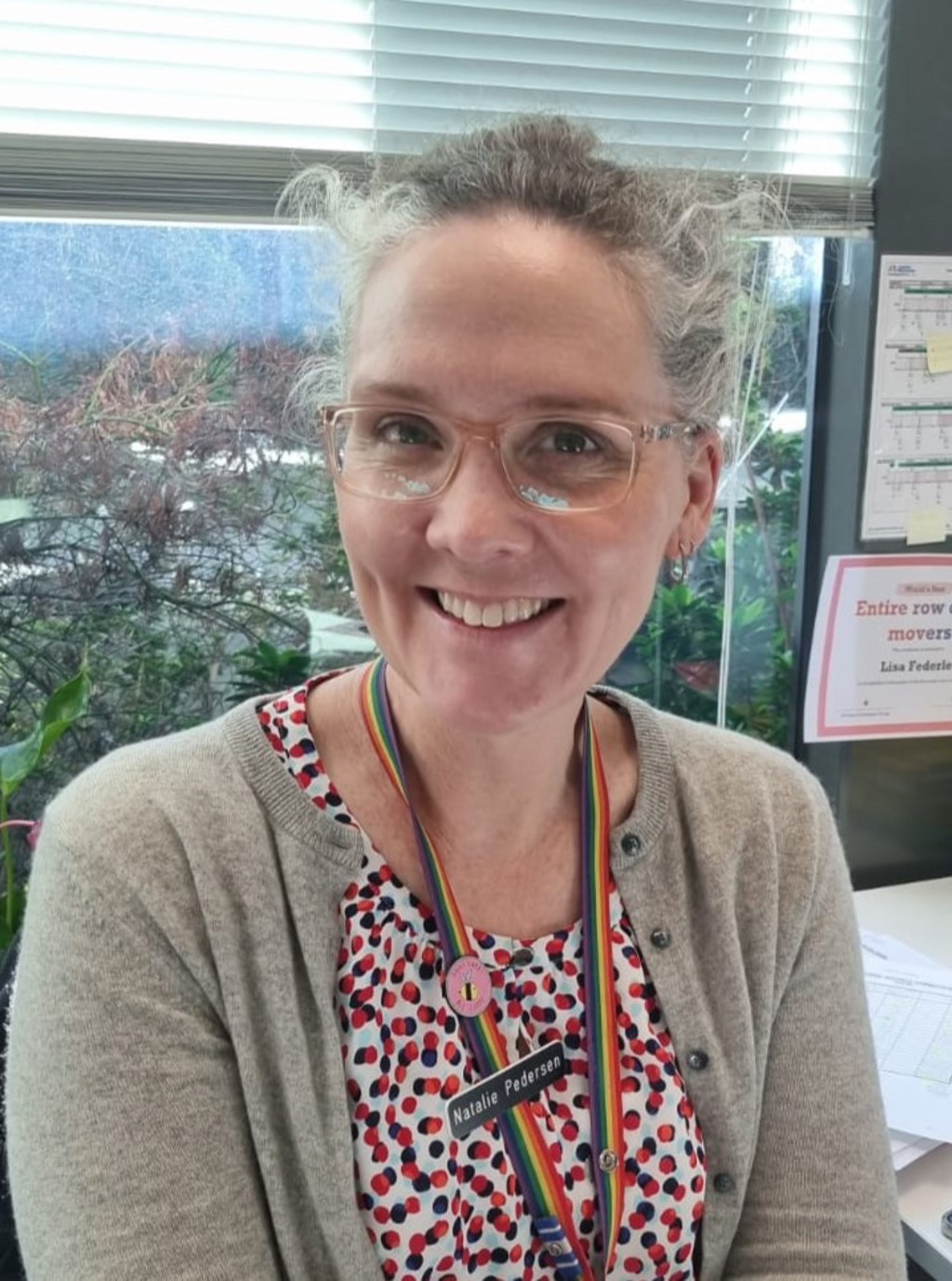
Natalie Pedersen

Dr Duncan Taylor
Dr John Buckleton
Dr John Buckleton is a Principal Scientist at the New Zealand Institute for Forensic Science and Public Health, and has been involved in activity level reporting and research since 1991.
Dr Tim Kalafut
Dr Kalafut is forensic DNA practitioner with over 20 years experience in the USA, mostly at the United States Army Criminal Investigation Laboratory. He is currently a faculty member in the Department of Forensic Science at Sam Houston State University. He has a long association with activity level testimony.
Ray Wickenheiser
Ray Wickenheiser is the retired Director of the New York State Police Crime Laboratory System and the new CEO of SupreMEtric, a company using Raman spectroscopy to identify body fluids. Ray has been conducting research into activity level propositions for the past 5 years, and using trace DNA to solve crime for 30 years.
Ashley Hall
Ashley Hall is the Director of the UC Davis Forensic Science Graduate Program and has been conducting research into activity level propositions for the past 5 years.
Stephanie Opperman
Stephanie Opperman is a Lead Senior Scientist at New Zealand Institute for Public Health and Forensic Science Limited (PHF Science) and Chair of the ALR Project Working Group under ANZPAA NIFS (Australia New Zealand Policing Advisory Agency National Institute of Forensic Science). Educated in Scotland, Stephanie has been a practising forensic scientist both in the UK and NZ since 2003 and has been involved in activity level reporting and associated research since 2018.
Jon Millman
Jon Millman is Head of Research and Development at the Centre of Forensic Sciences (CFS) in Toronto, Ontario, Canada. He obtained his bachelor and doctoral degrees in Biochemistry at McMaster University in Hamilton, Ontario. Jon then accepted a fellowship in the Department of Molecular and Medical Genetics at the University of Toronto, where his research focused on the application of functional genomic approaches to identify and characterize genes involved in cancer progression.
Jon joined the CFS as a Biology scientist in 2005 and was a Biology manager from 2007 to October 2024. As a manager in the CFS Biology section Jon held various portfolios, including oversight of a team performing violent crime casework, cold case reviews, and the Biology R&D program. In this capacity he copublished several manuscripts regarding transfer and persistence of bodily fluids and DNA. In his current role his responsibilities include conducting and promoting research and development for all forensic disciplines at the CFS.
Lynn Garcia
Lynn Garcia joined the FSC as General Counsel on December 14, 2010. Ms. Garcia advises the Commission on laboratory accreditation and forensic licensing and investigative functions, tracks developments in legislation relevant to the FSC's mission, ensures compliance with Texas open government laws, and represents the Commission before the Texas Legislature and at various national and international meetings.
She is a member of the Forensic Science Standards Board of the National Institute of Standards and Technology, Organization of Scientific Area Committees for Forensic Science. She is a founding member of the National Association of Forensic Science Boards. She served on the Expert Working Group on Human Factors in Forensic DNA Interpretation. She is a member of the jurisprudence section of the American Academy of Forensic Sciences. Ms. Garcia graduated from the University of Massachusetts Amherst with honors. She obtained her Juris Doctor from Georgetown University Law Center in Washington, DC in 2000.
Natalie Pedersen
Natalie Pedersen is a biologist, currently employed as a Principal Caseworker with the Victoria Police Forensic Services Department (VPFSD). She has over twenty years of experience in reporting on biological findings from serious crime cases within Victoria. From 2015 onwards, she has worked within the DNA Interpretation and Statistics Advisory Group which is responsible for training of staff, and the oversight of validation and implementation of new DNA interpretation reporting. In 2021, she was part of the team that revised VPFSD’s approach to reporting on evaluations of biological evidence given activity level propositions in the absence of Bayesian Networks.
Dr Duncan Taylor
Dr Duncan Taylor is Chief scientist of forensic statistics at Forensic Science SA, working on cases for prosecution and defence and testifying around Australia. He holds PhDs in biology and statistics, from Flinders University. Duncan is one of the developers of STRmix™, and the neural network component of FaSTR™. He is Distinguished Alumni at Flinders University, supervising honours, masters and PhD students. Duncan has over 150 peer-reviewed publications, and books on DNA interpretation and activity level evaluation.
Duncan was the first to implement a service for evaluating biology observations given activity level propositions in Australia, and has since assisted other laboratories towards the same goal. He has presented workshops on evidence evaluation through the Australian National Institute of Forensic Sciences, at international conferences, and ISFG summer school workshops. He assisted the Netherlands Expert Register in setting up their activity level expert assessment scheme. In 2021 Duncan received the Public Service Medal for contributions to forensic statistics.
Watch recording
Watch recording
